Sunday, March 29, 2015

Nepal: Kathmandu Airport (KTM)

During Chinese New Year, the bustling city of Shanghai empties out.  The sky fills with fireworks above quiet streets while booming explosions reverberate off the apartment towers.  Having spent the past two Chinese New Years with friends in Shanghai, we decided to join the exodus this year and headed west to Nepal.


We flew in and out of Kathmandu (KTM), Nepal's only international airport, but spent no time in the city itself.  The urban area of Kathmandu*, which is the capital and largest city in Nepal, is home to about 2.5 million people -- one twelfth of the nation's total population.  (The population of Nepal is about the same as that of Shanghai.)  From my very brief impression, Kathmandu is dusty and polluted -- suffering the inevitable fate of an area with more people than its infrastructure and electrical and water resources can support, especially one relying on "dirty" energy sources like wood, coal, and diesel.  Nepal has continuous rolling brownouts throughout the country, which they call "load shedding".

This post, however, is not about Kathmandu, the city.  It's about the domestic terminal of the Kathmandu airport, which charmed us to no end.  


We were dropped us off by a fence and pointed to a broken sidewalk leading into a construction site.  "Go that way," said the driver.  A collection of baggage carts sat by the corner; a sign tacked to the fence said "Domestic Terminal Building".  Monkeys scampered overhead.  Several other foreigners headed up the path. We followed.


The path led us through the bones of what will be the new domestic terminal at KTM, currently very much under construction.  The air traffic control tower and international terminal were visible across the way.

Another doorway led us into the current domestic terminal, a warehouse-type room where check-in desks for each airline (Yeti Air, Buddha Air, Sita Air, Nepal Air -- all little domestic carriers) sat side-by-side. Yeti Airlines issued us handwritten paper tickets and sent us through the security check (separated by gender, as in India) to wait.


And wait we did.  Due to prevailing weather conditions (morning fog), pollution (haze), and challenging terrain (due to its location in the Himalayas), lengthy delays are not uncommon.  Still, in a mountainous country with winding roads, our 25 minute flight would have meant a 6+ hour bus ride.  The waiting crowd grew as we all waited for flights to begin taking off.  Most were foreigners, decked out in hardcore outdoor gear and hiking boots.  Several groups were waiting for flights to a destination marked only as "Mountain" -- the small airport closest to Everest base camp.  That airport, in Lukla, is famously one of the most perilous in the world.


After twenty-five minutes in the air on a little prop plane, we deplaned in Pokhara.  Pokhara, the second largest city in Nepal (population: 260,000), features another adorable airport and stunning scenery -- more posts to come!


* The Kathmandu urban area is technically an agglomeration of Kathmandu, Lalitpur, and Bhaktapur, which all sit in the Kathmandu valley. 

Saturday, March 7, 2015

India: Kolkata (Calcutta)

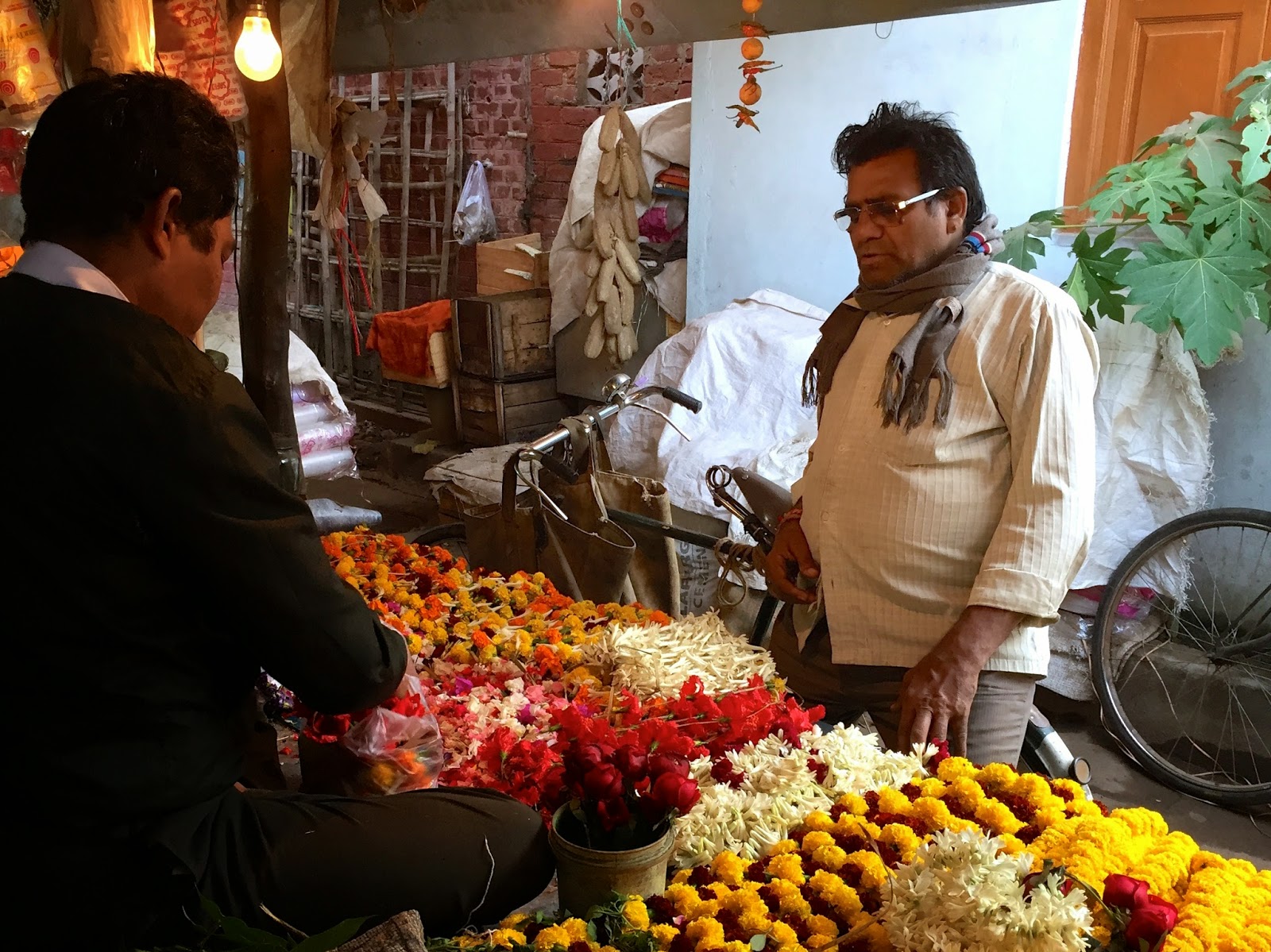
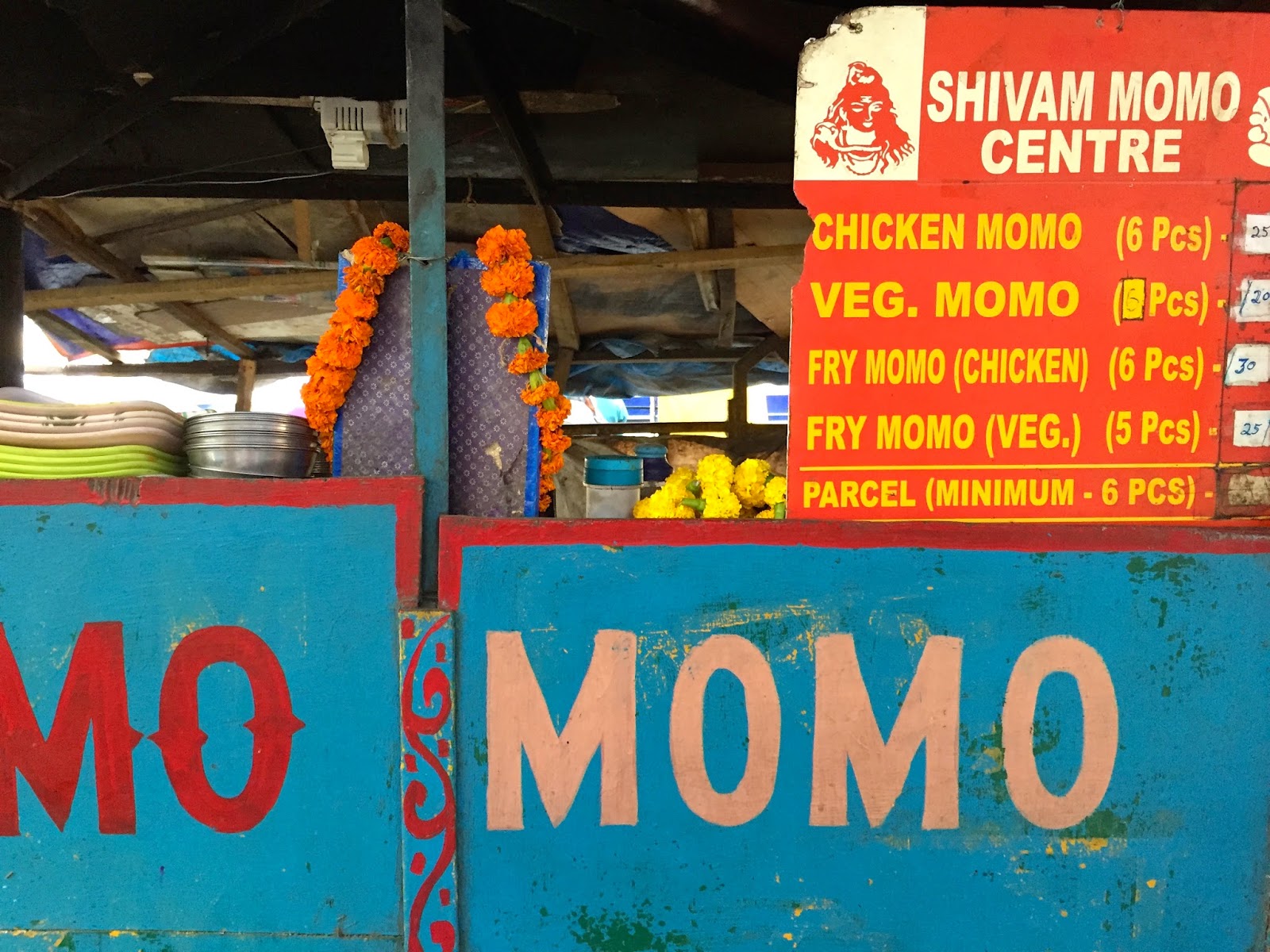
Kolkata: street markets, street food, lots of colors, and a pile of puppies.  Also gorgeous wedding events... but we left the camera at home for those.

Kolkata wasn't a typical tourist destination for us. I spent most of the time on bridesmaid duty while B. went out to do some exploring and lots of eating.  What we saw was more "neighborhood life" than "tourist highlights".  I'll let the photos speak for themselves!


Thursday, January 15, 2015

India: No hablo Indian Airport

I consider myself to be fluent in airport.  Give me a passport, a plane ticket, and a credit card, and I'll feel at home at pretty much any airport in the world.  (It helps that English is the international language of aviation.

Indian airports, however, seem to speak a dialect I've never encountered before.

Flying through four Indian airports in a week (Shanghai to DEL to CCU to BOM to IDR to DEL to Shanghai*) gave us plenty of exposure to their quirks.  Two experiences in particular stand out: processing our visas on arrival in Delhi, and flying domestic ("domestic") on Air India from Delhi to Kolkata. 


Visa on arrival
India, sadly, does not fall into the list of 160+ countries where Americans can travel without a visa.  Right before our trip, though, they started offering visa on arrival for Americans.  Perfect!  No need to find the Indian embassy in Shanghai!  We applied online (note: you still need to apply online before travel to India, unlike VOA in some other countries), paid the fee, and were approved within 24 hours. Easy peasy.

When we landed at the airport in Delhi, though, things were... not so organized.  Suffice it to say, visa on arrival for Americans is *so* new that the systems to process it were literally being put in place around us -- down computers, dizzying amounts of off-gassing, and all.  After a half-hour group effort by the immigration officials, all huddled around one computer to navigate the system, B.'s visa was successfully processed, his passport stamped.  He did a little dance.  The waiting crowd broke out in applause.  Ten minutes later, mine was successfully processed too and we were on our way.  We were two of the first people to pass through the new Delhi visa on arrival center.

Growing pains at the New Delhi airport
The New Delhi airport (DEL) has two terminals.  Colloquially, they're known as the domestic terminal and the international terminal.  At one point, perhaps not so long ago, those qualifiers may have been accurate.  Now, however, they're not.  When flying through the Delhi airport, all belief in accurate signage and logic must be suspended (except when it shouldn't). 

Thus, despite the fact that we were flying domestic to Kolkata, our Air India flight departed from the international terminal (as do all Air India flights these days). After check-in, we -- incorrectly -- waited in the domestic departures security line (still in the international terminal), only to be sent over to the international side... where an airport official had to wave us around the immigration booths, since we were not actually leaving India.  And upon landing in Kolkata, we found ourselves in international arrivals where, confusingly, we were made to clear customs... despite having come from Delhi.    


Some other quirks for the uninitiated:
  • Entering the airport: In this age of online booking and mobile internet, B. and I rarely print out our flight info or e-tickets anymore -- we just rock up at the check-in counter, hand over our passports, tell them our destination, and everything works out.  In India, though, armed soldiers guard the airport entrances, restricting access to those who could prove they were flying that day.  Print your itinerary!
  • Carry-on luggage: Not so much an issue as an iteration I hadn't seen before: when carry-on luggage was screened by security, it was tagged and stamped.  The stamped tags were checked again just before boarding the plane to make sure nothing had snuck through unscreened.
  • Flight delays: Indian airlines have a notoriously bad on-time record, especially when traveling through foggy (smoggy) Delhi during the winter.  From Nov 2014 to Jan 2015, Air India boasted a paltry 58% on-time rating for its top 20 routes.  Our three Air India flights were delayed for an average of 5 hours -- luckily, we *just* made our connection on the way back.  For those traveling in India in the future, our Indian friends say that IndiGo has the best on-time rating (89% to Air India's 58%, flying many of the same routes). 
  • Connections: I couldn't tell you exactly what the problem was with our connecting flights.  I think it's a problem of poor airport design (or at least poor for how they're used now) plus poor signage and slow lines.  Suffice it to say, connections were much slower and more complicated than they needed to be.  Finding the gate for our connecting flight in Mumbai felt like a scavenger hunt!
  • Announcements: Delhi, Kolkata, and Mumbai are all silent airports.  None of the loud announcements exhorting passengers to prepare for the pre-boarding process.  I'm a fan.
Final takeaway: when flying in India, leave extra time, bring patience and a sense of humor, and go with the flow.  You'll get there eventually.


* DEL = New Delhi.  CCU = Kolkata (formerly Calcutta).  BOM = Mumbai (formerly Bombay).  IDR = Indore.

Sunday, January 11, 2015

India: Taj Mahal

Not a piece of architecture, as other buildings are, but the proud passions of an emperor’s love wrought in living stones. 
            - Edwin Arnold in: Shefali Patel A Penchant for Love


The Taj Mahal hardly needs an introduction.  It is framed in countless photos, has been described in countless words.  The image of its domed white marble structure is unmistakeable, its place in the love story of Shah Jahan and Mumtaz Mahal well-known.  Like the Mona Lisa, it's familiar to all who visit.

Was it worth the trip in person?  Oh, absolutely.  Even more than I expected.  The picture-perfect postcards fail to capture how appreciation for the Taj Mahal builds progressively over a visit. 


While it seems strange to say about a site that's visited by millions of tourists a year, the Taj Mahal sits in layers of seclusion.  The outermost ring marks the halt of motorized vehicles, kept away to try and minimize the effects of air pollution on the striking white marble.  Cross this line and you're greeted by idle camels, waiting to carry tourists inward.  We opted to walk instead, pausing to pick up tickets and shoe coverings (for when you ascend the square plinth, to help protect the white marble from dirty shoes), and again for security screening (separate lines for men and women, with a long list of prohibited items).


The path inward leads to a large gate of red sandstone and contrasting white marble, decorated with flowers of inlaid gemstones.  Through this gate, you first see the Taj Mahal, perfectly symmetrically framed, rising in the distance, shrouded in mist.  It is an approach carefully curated to maximize awe and appreciation.   


The Taj Mahal looks just like the iconic photos.  And yet, until you're there, you can't fully appreciate its scale, its majesty.  It is unexpectedly extraordinary and breathtaking. 

The Taj sits as the centerpiece of a garden complex, flanked by two identically-built mosques, with lines of manicured shrubs and a reflecting pool inextricably leading the eye forward to it.  It is built in nearly perfect symmetry.  Nothing but sky is visible behind it; the ground behind dips to the banks of the Yamuna River.  The Taj Mahal reveals itself differently in different lighting; we were blessed with fog that lifted to beautifully-filtered sunlight as we entered.


Our tour guide said that Shah Jahan intended to build a second "Taj" across the river as his own tomb, identical except in black marble, a partner to the white marble tomb of his beloved wife Mumtaz Mahal.  The internet suggests this is a myth, though an attractive one.

Walking around the outside of the Taj Mahal reveals it to be a highly geometric building, with visually pleasing angles and symmetry.  Despite all the photos, I'd never realized that the Taj Mahal is octagonal -- a cube with chamfered corners.  The four minarets give it a sense of scale and 3D structure from afar.  They stand at a slight angle, designed to fall outward if they should ever collapse.  The structure was constructed to stand the tests of time and nature, with a well foundation to help stabilize it during earthquakes. 


After appreciating the Taj Mahal as a whole, approaching brings out the fine details.  The giant vaulted archways are adorned with flowers which are not painted, but constructed with semi-precious gemstones.  Each piece was handcrafted and inlaid in the marble.  Framing these are verses from the Koran, also inlaid.  It took thousands of artisans and craftsmen over twenty years (1632 - 1653) to construct the Taj Mahal -- an unthinkable amount of man-hours and material cost. 


Notice how a flower can be composed of multiple pieces, each of which must be shaped separately and exactingly. While the stones can withstand nature and time, they do not always survive interactions with man.
(see the missing flower in the lower right) 

The inside of the structure is more intricately decorated, with the marble cenotaph (empty tomb) of Mumtaz Mahal sitting dead center, and that of Shah Jahan off to one side; their bodies are interred below, at garden level.  We entered the inner sanctum with a crush of tourists, circled the cenotaphs with the ogling and photographing masses, and then were spit out the other side.


We ended our visit by sitting and quietly contemplating the Taj, before walking away with one last glance back.  I left with a tinge of sadness, an air of finality.  You can only first see the majesty of the Taj Mahal once in your life.  If we do return, it will be many years from now.  Hopefully the Taj Mahal will make it through the years untarnished by the pollution which threatens it.


Note: I've glossed over many of the details about the structure and history of the Taj Mahal to focus on the experience of visiting.  For more information about the Taj and the effects of pollution, there's a good article in Smithsonian Magazine from 2011 (link).

Saturday, January 3, 2015

India: Agra II

Note: I've split this trip into three posts.  While the Taj Mahal is the site that draws millions of tourists to Agra each year, it's not the only thing in town to see.


After spending a cold, foggy morning at Agra Fort, we stopped for lunch.  Food -- both copious and delicious -- was a common theme on this trip.  Care should always be taken when eating in India, though, and especially when drinking water (bottled only, avoid ice cubes), lest you fall victim to Delhi Belly!   


Our last stops in Agra (after a visit to the Taj Mahal!) were to see two traditional industries: hand-knotted carpets and marble inlaid with semi-precious stones.  Both industries in Agra receive significant government support, in part to try and offset the loss of other traditional polluting industries, like iron foundries, which had been ordered to clean up or move away.  Air and water pollution continue to take their toll on the Taj Mahal.  Despite the opulence of the Taj Mahal and the millions of tourists who flow through Agra each year, the common people in Agra are extremely poor.


Carpets 

I never properly appreciated before that hand-knotted carpets require someone to sit and, well, hand-tie all those knots.  A large carpet requires several people working in tandem, dedicating several months of their lives; the quality of a carpet is judged by the number of knots per square inch.  I can see why carpets -- especially before machine processes were invented -- are so expensive!  Given the amount of work involved, the prices in Agra were surprisingly affordable.

According to our guide, carpet-making is traditionally a family industry in Agra.  Each family will only ever make one pattern of carpet, memorizing the intricate patterns and then tying knots at amazingly fast speeds.  When multiple people work in tandem, they sing the colors to each other to stay in sync.  The families pick up cashmere or silk yarn from the store, and then return with the finished carpets. 


Cashmere and silk yarn storage


Inlaid Marble

Parts of Agra Fort and the entirety of the Taj Mahal are decorated with white marble inlaid with semi-precious gemstones.  To make these, each piece of gem is hand-sculpted, its setting carved in marble, the fit checked, and then the gem secured.  It's a labor-intensive process performed on a small-scale today.  Decorating a building the size of the Taj Mahal like this is practically unthinkable!


The white marble is stained with henna to make it easier to visualize.  After all of the gemstones have been inlaid, the henna is washed away to reveal the white marble.


Tables, coasters, chess sets, bowls, cups, and carved elephants available for purchase


An example of inlaid flowers at Agra Fort.  This is one of the simpler designs!